
In the digital era, the term “celebrity cult” has taken on an intensified, more complex meaning. No longer confined to tabloid pages or fan mail, celebrity worship has evolved into a full-blown digital phenonmenon where fans don’t just admire, but devote themselves to public figures with near religious fervor. These modern cults of personality are shaped by constant exposure, algorithmic reinforcement, and parasocial intimacy.
Its not just fame. It’s something deeper, stranger, and more devout.
It’s hard to tell when the obsession ran deeper. Back then, when celebrities were distant, untouchable gods, and every glimpse felt sacred… Or now, when fans can follow their every move, every meal, every mistake. Minute by minute.
Once, mystery fed the mania.
Now, it’s the illusion of intimacy.
But what lies at the heart of this worship? Beyond the lights, the headlines, and the hashtags. What truly binds fans to the figures they follow?
Parasocial Love & Control
A parasocial relationship is a one-sided emotional attachment, first defined by sociologists Donald Horton and Richard Wohl in 1956.
It’s the feeling of knowing someone who doesn’t know you at all. In the world of celebrity cults, these relationships bloom easily. Fueled by interviews, livestreams, vlogs, and carefully curate captions that feel like confessions.
To the fan, the connection feels real. Intimate. Earned.
But it’s built on an illusion.
Psychologically, parasocial love satisfies real emotional needs. It provides comfort, identity, even stability in times of personal chaos. But because the celebrity has no awareness of fan’s existence, the relationship is fundamentally unbalanced. The fan gives their time, energy, and emotion but receives only curated fragments in return.
And in this asymmetry, control begins to grow... When fans believe they deserve access. When they confuse visibility with vulnerability. When they treat a celebrity’s choices as personal betrayals. “Love” becomes surveillance. This illusion of connection is powerful but dangerous. Because when celebrities diverge from the story fans have written for them, fall in love with the “wrong” person, change their image, disappear from the spotlight… The love can turn cold. Support mutates into critique. Adoration twists into outrage.
Case Study: Selena, Justin & Hailey
Nowhere is the intensity of parasocial love and control more visible than in one of the most dissected love triangles of our time.
The story of Selena Gomez, Justin Bieber, and Hailey Baldwin isn’t just a tabloid timeline. It’s a blueprint of how fandoms can shape, distort, and weaponize public narratives.
Selena and Justin’s on and off relationship began over a decade ago. It unfolded in front of millions, through red carpet appearances, cryptic lyrics, Instagram posts, and rumors that spread like wildfire. Fans didn’t just watch; they participated. Many felt emotionally invested in the couple, projecting fantasies of soulmates, healing, and destiny onto two real people navigating a complicated relationship.
When Justin married Hailey, the reaction from some corners of the internet was swift and hostile. Hailey wasn’t seen as a person in her own right. She became a symbol of disruption. In the eyes of many fans, she was the one who stole the fairytale. This narrative was reinforced by years of fan made edits, tweets, and videos that framed her as an antagonist and cast Selena as a tragic heroine.
But something curious happened. As Selena tried to step back from the drame and speak more openly about mental health and boundaries, fans began to scrutinize her too. Some accused her of playing the victim. Others demanded statements, reactions, or retaliations. In trying to protect her, fans also began to police her.
The lines blurred further when media platforms joined the performance. Gossip sites, entertainment pages, and influencer commentary fanned the flames, often quoting out of context posts or fueling speculation. Every old photo, every eye roll in a video, every like on a comment became evidence in a digital courtroom.
Hailey’s life, in particular, was put under constant surveillance. She was accused of copying Selena, of mocking her, of trying too hard to be visible.
The fans who once rallied to “protect” Selena began turning their gaze into a searchlight. And in doing so, they revealed something unsettling. Not just about celebrity culture, but about us.
This wasn’t about love anymore.
It was about control over a self made fantasy, projection, and the thrill of belonging to a community filled with unending glamorous drama.
The intensity of fan entitlement didn’t stop at defending Selena. It eventually turned on her too. When rumors surfaced that she was engaged to someone new, the reaction was shockingly cruel. Many fans, especially those still emotionally attached to the Selena-Justin fantasy, fixated on the man’s appearance. He didn’t measure up to their standards. He wasn’t famous, glamorous, or conventionally attractive in the way they believed Selena deserved.
What followed was a wave of mockery, judgment, and thinly veiled disgust. Entire threads were dedicated to dissecting his looks. Jokes circulated about how Selena had downgraded. The love they once claimed to have for her transformed into disappointment, as if she had broken an unspoken contract by choosing a love that didn’t fit their script.
This kind of reaction is more than superficial cruelty. It sends a damaging message. That a woman’s happiness must be palatable to the public, that her partner must be aesthetic currency as much as a person. It reduces intimacy to optics, and the relationships to trophies.
For the man at the center of this ridicule, the message is equally brutal: that he is not enough. That love alone does not justify his presence in her life. It is a dehumanizing gaze. One that turns both bride and groom into public property.
And for Selena, it must feel like a betrayal. Not just from strangers, but from the very people who once claimed to protect her.
The Selena-Justin-Hailey saga isn’t an isolated incident. It’s part of a larger pattern. A symptom of how fandom, when left unchecked, can evolve into something far more intense and unyielding.
When Fnadom Becomes a Cult
Fandom begins as admiration. But in many cases, it transforms into something far more powerful. A collective belief system, complete with rituals, rules, and punishment for those who disobey. It stops being about the art of the artist, and becomes about identity, control, and blind loyalty.
In K-pop, the illusion of access and purity is tightly curated by the industry. Many idols are contractually bound to avoid romantic relationships. When dating rumors surface, especially involving women, fans often erupt. Some burn merchandise. Others boycott music or send hate messages. To love an idol is to believe they belong to you, and dating becomes a betrayal of that imagined bond.
The same intensity exists in Western fandoms. Taylor Swift’s “Swiftie” army has defended her through artistic reinventions and public feuds. But it has also turned on those who question her, often aggressively. Journalists, comedians, even other artists have been harassed or “cancelled” for what fans consider disloyalty. In these moments, Taylor is not longer a person. She is a symbol, and dissent is treated as blasphemy.
In Bollywood, Salman Khan commands a fanbase so loyal it borders on devotion. Despite multiple legal controversies, including hit-and-run charges and allegations of abuse, his supporters rally behind him with unwavering faith. Court cases are dismissed as conspiracies. Victims are sidelined. His fans don’t just admire him. They absolve him.
And then there is Kanye West, whose public behavior has veered from provocative to deeply troubling. Yet even as he spirals, a significant portion of his fanbase stands firm. They call him a genius, a prophet, misunderstoof by the world. In Kanye’s case, devotion persists even when empathy fades.
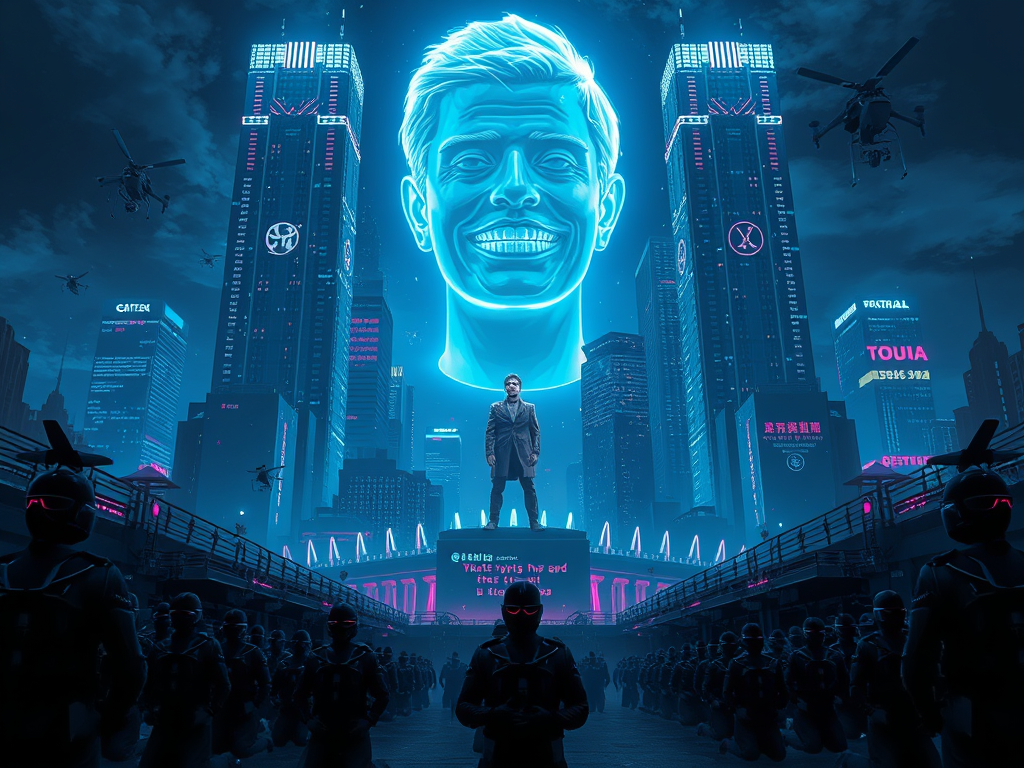
These aren’t just fan groups, they’re belief systems. And belief, when fused with identity, becomes hard to question. To criticize the celebrity is to attack the self. That’s what makes these cults so powerful, and so dangerous.
In each of these cases, the lines between love and control, admiration and obsession, become harder to see until they vanish altogether.
The Fine Line Between Fandom and Obsession
At its best, fandom is a celebration. Of art, identity, and connection. But when it slips into obsession, it putrifies. The very people fans claim to love are stripped of privacy, agency, and emotional space. They are expected to perform, to please, to belong.
The mental toll on celebrities is immense. Constant surveillance, public judgment, and the pressure to fulfill impossible expectations can lead to anxiety, depression, and isolation. Personal decisions about love, health, or identity become public property, and even silence is seen as a statement.
But it isn’t just the celebrities who suffer.
In the throes of devotion, fans often lose sight of themselves. Their identities become entangled with a stranger’s life. They lash out in defense of someone who doesn’t know their name. They spend hours analyzing, accusing, and defending. Not realizing that what they’re chasing is an illusion of closeness.
So where does responsibility lie?
Certainly, the platforms that profit from clicks and chaos must be held accountable. Algorithms reward controversy. Engagement is monetized, even when it causes harm. Silence isn’t neutrality, it’s complicity. Tech companies have the tools to slow the spiral but rarely the will.
Still, some of the work must begin within us.
To ask: Why do we feel so invested in someone else’s story?
To notice when admiration tips into obsession.
To remember that love, real love, requires distance, respect, and freedom.
Because without that, fandom stops being a celebration of someone else’s light. And becomes a shadow we cast from our own.
When Fans Become Executioners
The illusion is that fans love.
But sometimes, what fans really do is watch and wait.
In South Korea, where the K-pop industry is both revered and relentless, this truth has revealed itself in heartbreaking ways. In recent years, the suicides of artists like Sulli and Goo Hara sent shockwaves across the globe. Both were young women, close friends in life, and frequent targets of online harassment. Thier every move including how they dressed, what they said, who they dated was scrutinized not just by media but by the very fans who claimed to support them.
The comments were cruel. Gossip forums spun narratives. Hate disguised itself as moral concern.
And eventually, the pressure broke them.
These were not isolated tragedies. Other K-pop stars have faced similar struggles. Some have attempted suicide, others have disappeared from the public eye entirely. In an industry where idols are trained to smile no matter, the emotional toll of digital cruelty is often hidden until its too late.
What makes it more haunting is that many fans mourned them as if they had no part in their pain. But mourning without accountability is just another performance.
When fandom becomes a cult, it doesn’t just deify, it devours.
Distant Stars, Dimmed Lights
We love stars. But only when they’re far away.
On a screen, in a stadium, behind a filter. We shower them with praise. We buy tickets, cry over their struggles, fight strangers online in their defense. But when someone close to us, someone from our neighborhood, our family, our classroom dares to dream of that same spotlight, the reaction is rarely the same.
There is a strange cruelty in the way we respond to the ambition of people we know.
Instead of support, they’re often met with silence, suspicion, or subtle sabotage. We question their right to dream. We remind them of their past, their flaws, their limits. Not because they lack talent, but because their attempt threatens something in us.
Envy doesn’t always come with jealousy. Sometimes it comes disguised as realism. Or concern. Or polite indifference. But at its core is the fear that someone we consider “ordinary” might become extraordinary.
The same audience that worships celebrities from afar will, at times, bully a friend who tries to sing, mock a cousin who acts, or shame a sibling who wants to model. Because their rise feels too real. Too close. And it forces us to confront our own stagnation.
The tragic irony is that many of the stars we now idolize once suffered this same quiet cruelty. Their brilliance was ignored at home. Their voices dismissed. Their art ridiculed, until it found strangers who believed in it.
So we must ask:
Do we really love talent? Or do we only love it when it doesn’t reflect back on us?
Do we celebrate creativity, or only the myth of it, far away from our mirrors?
Until we answer that honestly, we’ll keep projecting our hunger onto celebrities while dimming the light of those we could actually nurture.

 Quanta Reads
Leave a comment