


Quanta Reads

Book and Film reviews, Opinion pieces on Science, Art, Music and more


China’s new optical-computing chip processes 100 wavelengths in parallel—showcasing the future of light-based AI hardware

  • The Self as Performance

    The Self as Performance

    Who are you when no one’s watching? And does that person even exist? In an age of constant visibility and digital exhibitionism, the “self is no longer a stable truth. It’s a curated, reactive,…

  • The Race for AGI: Meta’s Talent War and the Global Scramble for Machine Minds

    The Race for AGI: Meta’s Talent War and the Global Scramble for Machine Minds

    The New Gold Rush of Intelligence In May 2024, Meta made headlines by offering $100 million+ compensation packages to top AI researchers. Many of them former or current OpenAI engineers. This wasn’t just a…

  • Celebrity Cult Worship

    Celebrity Cult Worship

    In the digital era, the term “celebrity cult” has taken on an intensified, more complex meaning. No longer confined to tabloid pages or fan mail, celebrity worship has evolved into a full-blown digital phenonmenon…

  • China’s new optical-computing chip processes 100 wavelengths in parallel—showcasing the future of light-based AI hardware

    China’s new optical-computing chip processes 100 wavelengths in parallel—showcasing the future of light-based AI hardware

    Chinese scientists at the Shanghai Institute of Optics and Fine Mechanics (SIOM) have developed Meteor-1, the first ultra-parallel optical computing chip harnessing over 100 wavelengths of light to execute up to 2560 TOPS at…

  • Can Machines Think — Or Just Obey? Mira Murati’s $10B Bet on Conscious AI

    Can Machines Think — Or Just Obey? Mira Murati’s $10B Bet on Conscious AI

    Mira Murati is back—this time building Thinking Machines, a company poised to reshape the future of AI. From raising millions to assembling a dream team, here’s why the world is betting on her again—and…

  • In the mood for love (2000)

    In the mood for love (2000)

    In the mood for love is probably one of the most iconic movies of all time and I’ve been meaning to watch it for a while. It was everything that I expected and more.…

  • Killing Commendatore

    Killing Commendatore

    Haruki Murakami “It was still pitch black when I woke up. I couldn’t see my finger when I waved it in front of my face. The darkness blotted out the line between sleep and…

  • How I fell in love with books

    How I fell in love with books

    Why is it that humans like to read? Just stare at little symbols on a piece of paper and enter a parallel world. A decade or two ago, this question might have had a…

1–2 minutes

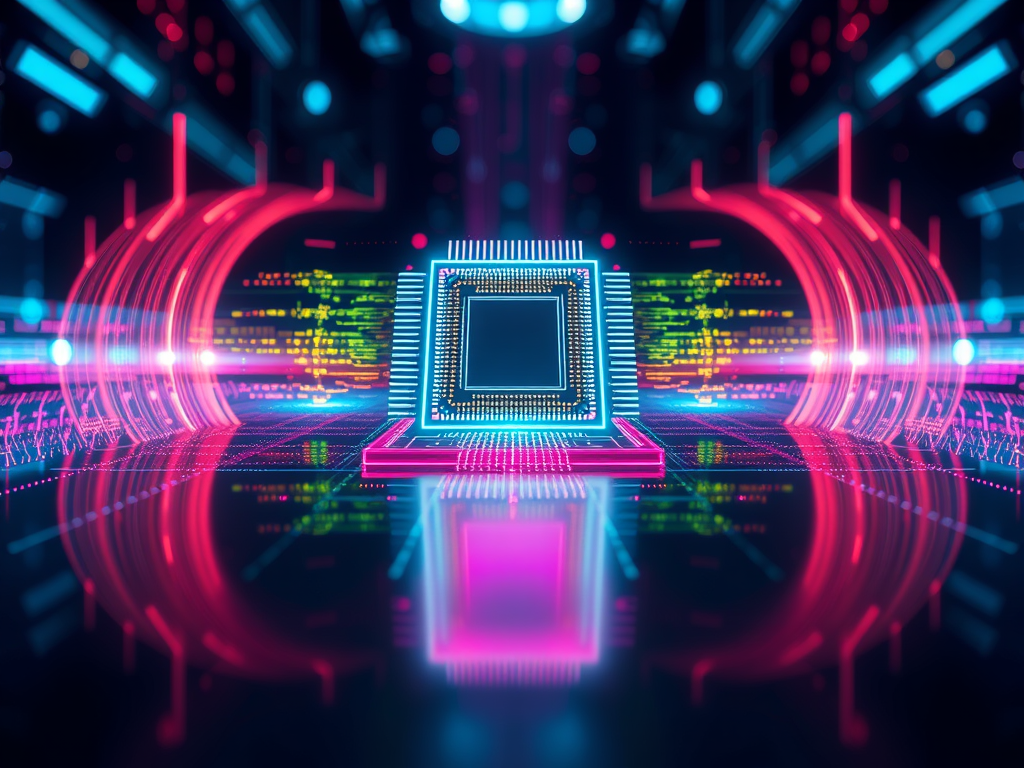
Chinese scientists at the Shanghai Institute of Optics and Fine Mechanics (SIOM) have developed Meteor-1, the first ultra-parallel optical computing chip harnessing over 100 wavelengths of light to execute up to 2560 TOPS at a 50 GHz optical clock rate. This architecture leverages soliton microcomb sources and a Mach-Zehnder interferometer mesh, enabling massive on-chip parallelism without increasing frequency or footprint. Offering an elegant, energy-efficient alternative to traditional GPU-based systems.

Unlike electronic processors that rely on voltage-driven transistors, Meteor-1 computes using photons, dramatically reducing heat and power consumption. It’s theoretical performance rivals top tier NVIDIA GPUs, with vastly lower energy demands, positioning it as a disruptive technology for AI training, real-time signal processing, edge computing (drones, satellites), and high-throughput scientific simulations.

Meteor-1 is currently a lab-grade prototype; full neural network deployment still requires hybrid electronic-photonic integration for non-linear operations. Meanwhile, China has also launched a pilot production line for photonic chips using thin-film lithium niobate wafers – marking the first steps toward scalable manufacturing for AI, 6G, and quantum infrastructure. As export restrictions hinder access to conventional semiconductor tech, optical computing offers a strategic path to hardware autonomy.