




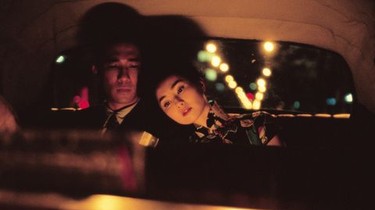


Who are you when no one’s watching? And does that person even exist?
In an age of constant visibility and digital exhibitionism, the “self is no longer a stable truth. It’s a curated, reactive, and often unconscious performance. Drawing from psychology, philosophy, and media theory, this article explores how identity is constructed, maintained, and sometimes lost in the act of being seen.
The Self
You don’t wake up as yourself. You become yourself, every morning, through small rituals of identity. The mirror. The outfit. The scroll. The mask.
And the deeper question is not who am I? but Who am I performing for today?
We live in an era where the self is always staging itself. The boundary between the private and the performative has collapsed. Not just online, but in everyday interactions. Is there even a “real” you beneath all the roles? Or are we all just actos in a play with no audience and no script?
The Psychology of Performance
In The Presentation of Self in Everyday Life, sociologist Erving Goffman proposed that life is not unlike theatre. We are actors, constantly performing roles for an invisible audience. From boardrooms to bedrooms, we adapt our behavior to fit the social context, donning masks crafted to earn approval, avoid rejection, or secure a sense of belonging.
Each of us carries a wardrobe of selves: the obedient daughter, the loyal friend, the seductive lover, the defiant rebel, the polished professional. These personas aren’t chosen arbitrarily. They are shaped early in life through the lens of attachment. A child who learns that being quiet earns affection may grow into an adult who equates silence with love. Another, who was rewarded for being clever, may cling to intellectual superiority as a form of emotional armor.
As the years pass, these performances harden into habits. The mask clings to the skin. We forget where the act ends and the real self begins.
But the tragedy is when survival becomes the only script we know.
The Philosophical Collapse of Identity
The notion of a stable, coherent self has long been challenged by philosophers, who suggest that what we call “identity” is less essence than illusion.
Jean-Paul Sartre, in his existentialist framework, introduced the concept of mauvaise foi “bad faith” to describe the self-deception that occurs when individuals reduce themselves to fixed roles. For Sartre, labeling oneself as “just a teacher” or “just a professional” is not merely descriptive but an evasion of existential responsibility. It is a refusal to confront the radical freedom we possess: the ability to re-define ourselves at any moment. To live in bad faith is to hide behind identity as a shield against the abyss of choice.
Friedrich Nietzsche went further, dissolving the self altogether. In his view, the self is not a substance but a becoming. A dynamic flux of instincts, drives, and interpretations.

There are no facts, only interpretations.
To claim is to deny the constant creative chaos of life. For Nietzsche, to live authentically is not to be someone, but to become endlessly.
Post-structutalist thinkers inherit and expand this destabilization. Michel Foucault argued that identity is a construct of power, the categories through which we define ourselves (mad, sane; man, woman; criminal, citizen) are not natural truths but discursive formations shaped by historical regimes of knowledge and control. The self is not discovered; it is produced.
Judith Butler, drawing from both Foucault and performance theory, applied this logic to gender. In Gender Trouble, she argued that gender is not something one is, but something one does. Through repeated behaviors like gestures, speech patterns, style of dress we enact what is socially legible as “man” or “woman.” These acts create the illusions of a stable gender identity, but beneath them lies no original, authentic self. As Butler writes, “There is no gender identity behind the expressions of gender; that identity is performatively constituted by the very ‘expressions’ that are said to be its results.”
The implications are profound: you don’t have a self, you do the self. Identity is a verb, not a noun. And some performances are so rehearsed, so culturally reinforced, that even the actor forgets it’s a role.
In this philosophical light, the self collapses not into nothingness, but into multiplicity. What we thought was stable becomes fluid. What we assumed was essence reveals itself as artifact, the residue of repetition, adaptation and power.
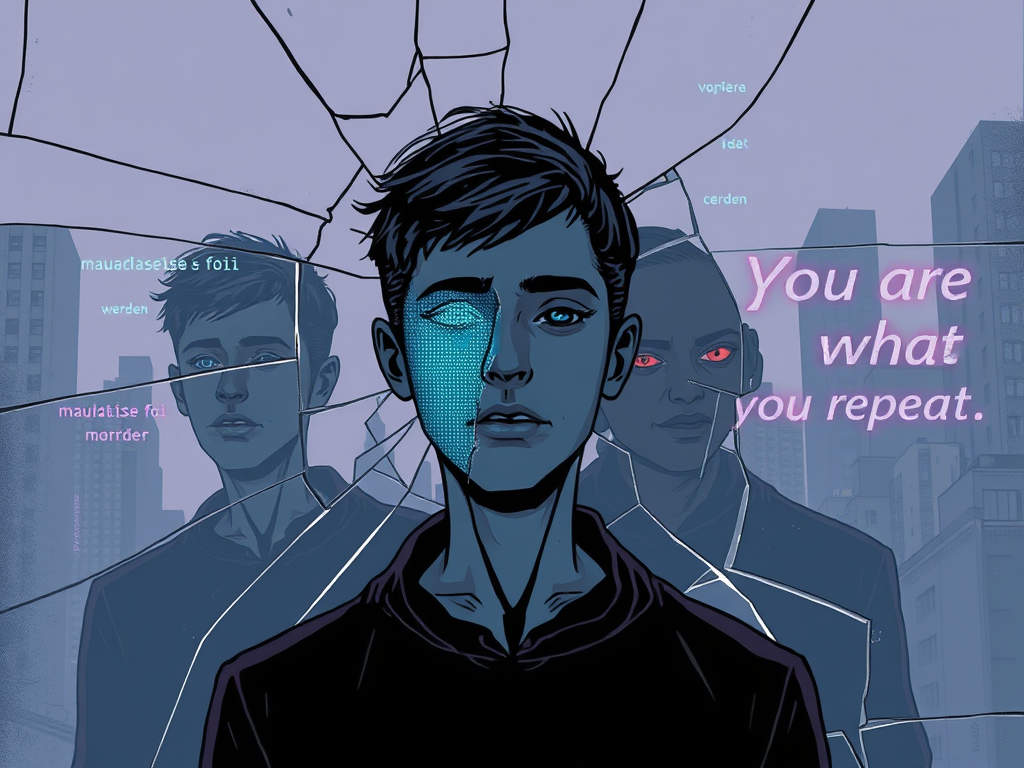
Digital Life and the End of Privacy
In the digital age, identity has not only fragmented, it has become commodified. Social media platforms like Instagram, TikTok, and even LinkedIn function as stages, not for authentic expression, but for strategic self-display. We are no longer just performing roles for family, friends, or colleagues. We are now curating personas for a global audience.
This is the age of surveillance capitalism, a term coined by Shoshana Zuboff to describe a system in which our behaviors, preferences, and emotional patterns are constantly monitored, extracted, and sold. Platforms reward engagement, not introspection. So even our deepest wounds are optimized for visibility. Sadness becomes a soft-filtered reel; grief becomes a carousel post with a call to action; healing is aestheticized through mantras, skincare routines, and sunset yoga shots. We don’t just experience emotions, we style them.
The pressure to be “authentic” has become its own performance. In this economy of attention, rawness is a commodity and vulnerability a brand strategy. “Being real” is incentivized, packaged, and algorithmically boosted. The result is not genuine self-expression but curated transparency, just believable enough to seem human, just polished enough to stay marketable.
Privacy, once understood as secrecy or solitude, now means something subtler and more radical: the ability to exist without the need to perform. To laugh, cry, think, or simply be. Without considering how that moment might be captured, edited, and consumed. But such moments are vanishingly rare.
Even our most intimate experiences are now shaped by their potential future audience. A romantic night is imagined as a post. A breakdown is rehearsed for the camera. Memory collapses into content. And presence, the actual experience being is sacrificed to the ghost of potential perception.
Even when alone, we act like we’re being watched.
Because in this world, we always are.
What Happens When You Lose the Script?
There are moments in life when the performance collapses. Not by choice, but by crisis. Breakdown. Burnout. Trauma. Loss. These are not just psychological events; they are existential ruptures. The familiar identity, the mask worn so convincingly for years… fractures. And what’s left behind is not clarity, but a void.
In clinical terms, this rupture can resemble depersonalization. A disorienting sense of detachment from the self. The face in the mirror becomes unfamiliar. The voice seems like someone else’s. For many, this is terrifying: if I am not this role, this job, this personality… then who am I?
But hidden within this existential disintegration lies a strange, paradoxical potential: freedom.
When the script disintegrates, so too does the obligation to follow it. The collapse of identity, while painful, creates space for something radically different. Not a new mask, but a new mode of being. This is the insight echoed in spiritual traditions across time. In Buddhism, the goal is not to strengthen the ego but to dissolve its illusions. The self is understood as anatta. Not self, a bundle of experiences and attachments mistaken for something solid. To awaken is not to become someone else, but to see through the illusion that there was ever a “someone” to begin with.
Mystical traditions speak of ego death as a gateway. Not to nihilism, but to expansion. When the boundaries of the self dissolve, so too does the sense of separateness. Identity gives way to interconnectedness. Consciousness is no longer confined to a name, a story, or a role. It becomes presence: raw, unfiltered, and profoundly alive.
This is not a painless process. The death of identity feels like annihilation, because for most of us, identity is safety. But safety can also be a prison.
To lose yourself is terrifying.
Until you realize the ‘self’ was just a costume all along.
Reclaiming the Self Beyond Performance
If performance is inescapable, he question is no longer how to stop performing, but how to perform consciously. The tragedy is not that we wear masks, it’s that we forget we’re wearing them.
In an age where identity is curated, monetized, and surveilled, reclaiming the self becomes an act of radical presence. This isn’t about rejecting every role, but about learning to hold them lightly. Knowing when to step in and when to step out.
When the Mask Consumes the Wearer
The danger of performance is not in the act itself, but in mistaking the act for reality. When a person identifies too closely with a mask, especially one rooted in domination, influence, or the craving to be admired that mask begins to devour everything else.
Powerful personas; the seducer, the savior, the intellectual, the alpha offer psychological safety. They protect against feelings of inadequacy, insignificance, or rejection. But they also extract a cost: the more we rely on a particular mask for identity, the more fragile and defensive we become. The mask must be fed. With attention, submission, praise… or we begin to feel like we are nothing at all.
This is especially tru for those who seek worship, not connection. When someone becomes addicted to being the most admired, the most feared, or the most desired person in the room, they start to lose the capacity for vulnerability, reciprocity, and emotional truth. Their relationships become mirrors for their ego, not sanctuaries for their soul.
What follows is a spiritual corrosion. The self contracts. Every interaction becomes transactional. Love is measured in how well others reflect back the mask. Intimacy is avoided because it threatens to reveal what lies behind it: uncertainty, fear, the unscripted self. The need to dominate others is often rooted in a deep fear of being seen as one truly is .. unpolished, fallible, human.
Over time, this attachment to performace creates inner suffocation. The soul, the deeper seat of awareness, compassion, and fluidity… becomes buried beneath the weight of constant posturing. Relationships become hollow. Creativity declines. The person becomes a caricature of their own mask, trapped in the very image they constructed to feel safe.
And yet, the tragic irony is this: the more tightly someone clings to the mask, the more insecure they become. Because if your entire sense of self is built on being the adored one, the feared one, the dominant one then any moment of rejection, failure, or irrelevance feels like annihilation.
To be worshipped is not to be loved.
To dominate is not to be known.
And to live entirely through a mask is to live in exile from the self.
True freedom comes not from being seen a certain way, but from no longer needing to be seen at all. At least, not through the lens of control. It comes from resting in that silent space behind all roles, where identity is no longer performed, but held lightly. Fluid, responsive and real.
Conscious authenticity doesn’t mean being unfiltered at all times. It means understanding which roles serve you, and which have begun to possess you. It means asking, with honesty: Am I performing out of fear? Habit? Love? Awareness?
This kind of self awareness is not passive. It’s active discernment. The power lies in the pause before the performance, in the clarity that precedes the script. To be truly free is not to erase the self, but to realize that the self is fluid, chosen, and revisable.
Spiritual philosophies point us toward a deeper truth: beneath the roles, beneath the stage, there is something more essenial. Not a “true self” in the fixed sense, but an origin point. A silent space of awareness from which all roles arise and dissolve. It is not the actor or the mask, but the capacity to take on form.
In this view, the self is not a noun, not even a verb. But a field. A silence. A space of possibility.
What if you’re not the actor or the role, but the silence behind the stage?
To return to that silence is not to disappear. It is to reclaim the freedom to become. Again and again, without losing yourself in the mask.
Living More Authentically: Awareness as Liberation
Authenticity is not the absence of performance. It’s the awareness of it. It begins when we ask: Who am I beneath this role? Why am I choosing it? And what happens if I don’t?
To live authentically doesn’t mean expressing every thought or emotion without filter. Nor does it mean rejecting all social norms. It means knowing which parts of yourself are chosen, and which have been unconsciously inherited. From trauma, culture, or fear. It’s about aligning your external actions with your internal truths, even when it’s inconvenient, even when it disrupts the performance expected of you.
Self-inquiry over self-branding
In a world dominated by personal branding, it’s easy to confuse identity with image. Authenticity begins when we turn inward with sincere curiosity, asking not how do I appear?, but who am I, truly? Self-Inquiry invites us to notice when we are acting to impress, to please, or to manipulate perception. It asks us to reflect on whether our goals, values, and even desires are genuinely ours or internalized scripts from cultur, parents, or fear. Unlike branding, which is built for consumption, self-inquiry is built for integration. It grounds us in a private, often messy, but honest relationship with ourselves. One that doesn’t need to be aesthetically pleasing or algorithmically successful.
Tolerating disapproval
Authenticity often carries a cost: not everyone will approve of your realness. When we live for approval, we contort ourselves into what others want us to be. Agreeable, impressive, easy to like. But authenticity demands that we risk being disliked in order to remain in integrity. This doesn’t mean being hostile or indifferent. It means accepting that staying true to your needs, limits, or truths may ruffle feathers. Tolerating disapproval is a sign of emotional maturity. It reflects a shift from external validation to internal alignment. You stop being a mirror for others expectations and begin to stand, gently but firmly, in your own truth. Even when it invites discomfort.
Fluidity over rigidity
Rigid identities may feel safe, but they often become cages. When we over-identify with a particular role: the caretaker, the rebel, the achiever… We stop growing. Authenticity embraces fluidity: the freedom to change, contradict yourself, and evolve. It means giving yourself permission to feel things you didn’t expect, to want different things than you did last year, or to outgrow old narratives. Fluidity acknowledges that being human is not about consistency, but aliveness. We are not meant to be static characters. The most honest version of the self is one that is willing to change shape as life unfolds.
Saying no when it’s easier to say yes
People-pleasing is one of the most common forms of self-abandonment. We say yes to avoid conflict, to appear “nice,” or to preserve an illusion of harmony. Even when a part of us is screaming no. Authenticity involves reclaiming the sacred boundary of self-consent. It means lstening to the quiet voice inside that knows what’s right for you. and honoring it, even when it makes others uncomfortable. Conversely, it may also mean saying yes to new experiences that scare you, if your truth leans toward growth. Either way, the key is not what you choose, but whether the choice emerges from honest self-awareness rather than fear.
Being present
Perhaps the most foundational expression of authenticity is presence. When we are rehearsing what to say, editing how we appear, or mentally jumping into the future, we are not here. Performance is always about projection; presence is about contact. Contact with the moment, with others, and with yourself. Being present requires dropping the ego’s compulsion to manage impressions and instead surrendering to what is real right now. It is the antidote to hyper curated living. In presence, spontaneity returns. You laugh not because it’s expected, but because it arises. You cry without apologizing. You listen without scripting your response. In that presence, something profoundly human and deeply authentic comes alive.
The Risk of Being Real
Let’s be honest: authenticity is not always rewarded. In fact, it can be punished. In systems built on conformity, hierarchy, and competition, those who show up without masks often make others uncomfortable. They threaten illusions that others are still invested in. Shine too brightly, and someone will try to dim you. Speak too honestly, and someone will call you difficult, arrogant, or “too much.”
In many communities ~ families, friend circles, workplaces, there is a cost to rising too far above the expected performance. There are quiet rules: don’t outgrow your role, don’t ask too many questions, don’t be too free. Those who break these rules are often met with withdrawal, gossip, or rejection.
This is the reality many high-achievers and creators wrestle with: if I stop performing, will I lose everything I’ve built? Will I be alone? Will the world leave me behind?
And sometimes… yes. Some people will leave. Some opportunities will dry up. But here’s the deeper truth: if the only version of you that is acceptable is the masked one, then what exactly have you gained?
Success Without Self Is Still a Loss
You can win the race, and feel dead inside. You can gain admiration, and have no idea who loves you versus who loves the role you play. You can reach the top and find that there is no one left beside you who sees your soul. That’s not success. That’s strategic exile.
The world may reward compromise. But compromise without consciousness becomes self-erasure There’s a difference between choosing to adapt and being forced to disappear. The pain that creators feel: the punishment for being real is not because authenticity is worthless, but because truth disrupts control, and most systems are built on subtle forms of control.
But Something Else Happens Too
Authenticity filters. The people who cannot tolerate your light will leave… but the ones who stay are the ones who can meet you as you are. You may lose mass appeal, but you gain depth. You may forfeit approval, but you find intimacy. Most importantly, you recover something success can never give you: a life that feels like it’s truly yours.
And ironically, many of the most impactful people in the world: artists, visionaries, spiritual teachers, even founders are those who suffered because of their authenticity but kept going anyway. They didn’t win despite being real. They won because of it. Not quickly. Not easily. But fully.
You Get to Choose
This isn’t about denying how the world works. It’s about choosing what kind of world you want ot live in. And what kind of self you’re willing to sacrifice to belong to it.
If you decide that survival matters more than truth, that’s valid. But know the cost.
If you decide that shining comes with loneliness, but choose to shine anyway… that’s not foolishness. That’s integrity.
Because at the end of all this performace, there will come a quiet moment… maybe at night, maybe in loss, maybe in front of a mirror… where the only question that will matter is:
Did I live as myself, or just survive as someone else?
When Currency Replaces Meaning
It’s true: the world does reward those who play by its most ruthless rules. The performer who perfects the role of the hustler, the charmer, the dominator, often does receive material gains… money, influence, proximity to power. They might even appear “successful” in the eyes of others.
But success is not always a sign of alignment. Sometimes, it’s a sign of deeper disconnection. From one’s body, spirit, and inner compass. To say, “I have wealth even if I’ve become ill, hollow, and prematurely aged,” is to confess a kind of spiritual bankruptcy. It’s saying: I traded vitality, joy, and self-respect for a number in a bank account.
That’s not power.
That’s addiction to validation, disguised as success.
The Body Always Knows
The body doesn’t lie. It keeps score when the soul is silenced. (Dr. Gabor Mate) Chronic stress, anxiety, burnout, and premature aging are not superficial concerns. They are red flags from the unconscious, signaling that something is deeply out of alignment. When someone insists this is the price of success, what they’re really saying is: I’ve learned to normalize pain as proof of my worth.
And in some twisted way, our culture encourages this. It equates sacrifice with seriousness. The more you suffer, the more you’ve “earned” your place. But what if you don’t need to suffer to be worthy? What if success without collapse is not only possible, but more sustainable?
What They Don’t Say Out Loud
Beneath their defense is often a silent, unspoken grief: the friendships that faded, the intimacy they lost, the self they abandoned along the way. They won the game, but now they must convince themselves that the game was worth winning.
They must keep running, because stopping would force them to feel all that was sacrificed. The aging, the illness, the existential fatigue… these are not accidents. They are the soul’s rebellion against a life lived only on the surface.
A Different Kind of Wealth
There is another kind of success. one not driven by burnout, control, or external metrics. A success defined by wholeness. A life where the body is not punished to prove ambition. Where relationships are not tools. Where silence doesn’t feel threatening. Where beauty deepens with age because the soul is intact.
It may not come as quickly. It may not be understood by everyone.
But it doesn’t leave you lonely, bitter, or broken at the finish line.
So the question isn’t just “Are you successful?
It’s:
Do you sleep well?
Are your relationships nourishing or transactional?
When you’re alone, do you like who you are?
When the spotlight fades, is there anything left of you?
If the answer is no, then what exactly have you won?
Loving the Chains: The Seduction of False Power
When someone is oppressed; economically, socially, or spiritually… They often reach for compensatory performances. In place of freedom, they seek control. In place of dignity, they seek dominance. This is why even the economically poor may accept their own suffering as long as they feel superior to someone they consider to be “beneath” them. Someone poorer, weaker, or more voiceless.
This is the psychology of the mask turned toxic:
When you cannot escape your own chains, you decorate them.
You shine them. You make them a symbol of strength.
And then, to avoid facing the pain of your own subjugation, you impose that pain onto others. Domination becomes a ritual of disavowal. A way to prove to yourself that you’re not as powerless as you feel.
Performance as Protection and Projection
This ties directly to the argument we’ve been exploring: people who over-identify with roles of control, influence, seduction, or superiority oftn do so not because they are truly powerful, but because they feel profoundly unsafe inside. Their mask of dominance is a way to avoid confronting the deeper truth: that they too are exploited, unseen, or unloved… often by the very systems they defend.
“You are someone as long as you keep performing. We will not give you freedom but we will give you a costume.”
And they take the costume. And then they defend it viciously. Because to remove it would mean facing a terrible void: the realization that they built their entire sense of worth inside a prison.
The Vertical Illusion
What keeps this cycle alive is the illusion of vertical power. The idea that if you’re not at the bottom, you’re winning. This is how capitalism and hierarchy weaponize shame. Rather than uniting against their chains, people begin to compete over who has the prettiest shackles. Better clothes, better apartment, more followers, more obedient partners.
This vertical game is why many reject authenticity: It threatens the game itself. If I stop performing, I might lose my only claim to superiority. If I remove my mask, I might see how hollow my “success” really is.
To dominate others while being dominated yourself is not power. It’s despair with good PR.
So yes. The slaves love their chains.
Because the chains come with status.
Because the chains offer an identity.
Because the chains let them pretend they are not enslaved, as long as someone else is more so.
But loving your chains doesn’t make you free.
It just makes you a guardian of your own cage.
And authenticity? That is the quiet, dangerous act of saying:
I would rather be unknown and whole than praised and imprisoned.
 Quanta Reads